Last updated: 9 September 2026 | Medically reviewed by: The GPCarely Clinical Review Team | Reading level: General audience
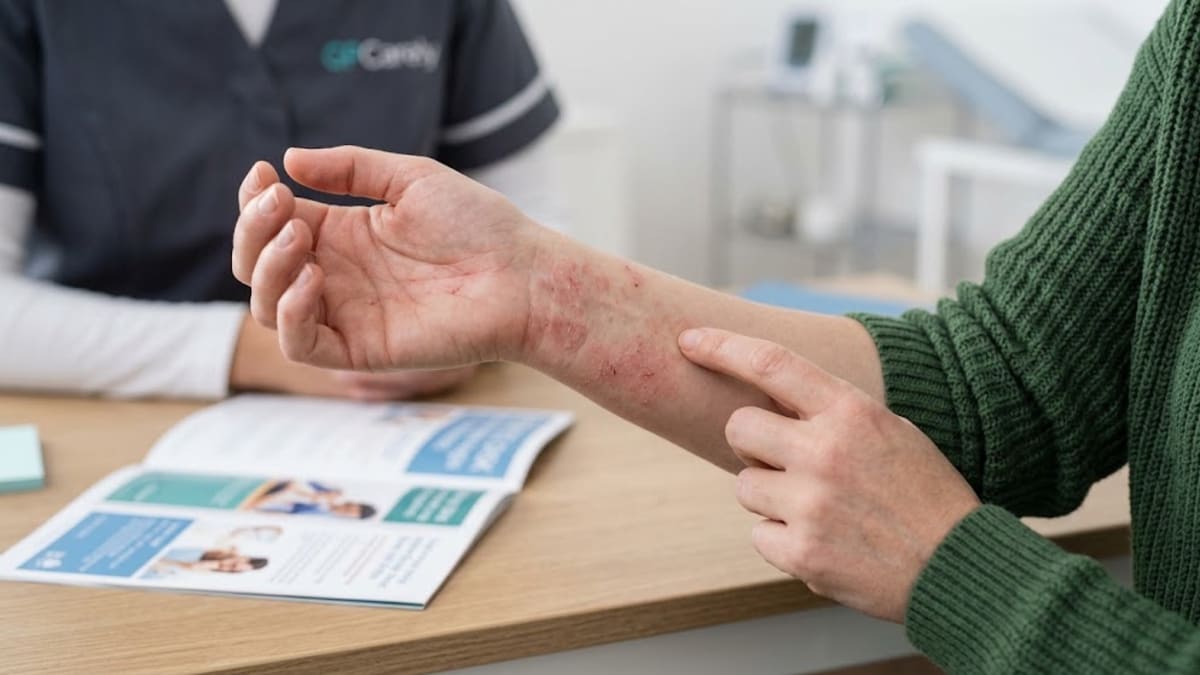
If you've noticed eczema patches appearing on new areas of your skin, or you're worried about passing it on to someone else, you're asking a question that comes up constantly: can eczema spread? The short answer is that eczema isn't contagious in the way an infection is, but the patches themselves can genuinely expand or appear in new locations for reasons that have nothing to do with transmission. This guide explains what's actually happening when eczema seems to spread, what triggers it, and when it's worth seeing a doctor. If you're new to our platform, you can learn more about us or get in touch with any questions.

Is Eczema Contagious?
No, eczema is not contagious. It cannot be passed from person to person through touch, shared items, or close contact, regardless of how visible or widespread the patches appear. Eczema (atopic dermatitis being the most common type) is a chronic inflammatory skin condition linked to a combination of genetic factors, immune system responses, and a compromised skin barrier — not an infectious organism like a virus, bacteria, or fungus.
This means you cannot catch eczema from someone who has it, and you cannot give it to someone else through skin contact, sharing towels, or any other form of physical proximity.
So Why Does Eczema Seem to Spread?
While eczema isn't contagious, the patches themselves can genuinely expand across the skin or appear in new areas over time. This happens for several reasons:
1. Scratching Damages the Skin Barrier
Scratching an itchy eczema patch damages the skin's protective barrier further, which can cause inflammation to spread to surrounding skin. This creates a cycle sometimes called the "itch-scratch cycle," where scratching provides brief relief but ultimately makes the affected area larger and more irritated.
2. Underlying Triggers Affect Multiple Areas at Once
Since eczema is driven by internal factors — immune response, skin barrier function, and environmental triggers — a single trigger (such as a new soap, stress, or a change in weather) can cause flare-ups in several areas of the body simultaneously, which can look like the condition "spreading" even though each patch developed independently in response to the same underlying trigger.
3. Untreated Flare-Ups Tend to Worsen
Without appropriate treatment, an eczema flare-up can become more inflamed and extend into surrounding skin over days or weeks. This is different from an infection spreading — it's ongoing inflammation expanding because the underlying trigger and immune response haven't been addressed.
4. Secondary Skin Infections
In some cases, scratched or broken eczema skin can become infected with bacteria (commonly Staphylococcus aureus), which is a genuine infection and can spread to other areas or, in some cases, to other people through contact. This is different from eczema itself spreading — it's a secondary bacterial infection developing on top of existing eczema, and it typically requires separate treatment such as antibiotics.

Signs That Suggest a Secondary Infection (Not Eczema Itself)
Unlike ordinary eczema flare-ups, a secondary infection often presents with:
- Yellow or golden crusting on the skin
- Pus-filled blisters or sores
- Increased warmth, swelling, or pain in the area
- Fever, in more significant infections
- Rapid worsening despite usual eczema treatment
If you notice these signs, it's worth seeking medical advice promptly, since a bacterial infection typically needs targeted treatment beyond standard eczema management.
Common Eczema Triggers Worth Identifying
Because eczema flare-ups (rather than an actual spreading infection) are usually behind new or worsening patches, identifying and managing triggers is often more useful than trying to physically contain the condition. Common triggers include:
Trigger Category Examples Environmental Dry air, cold weather, sweating, pollen Irritants Harsh soaps, fragranced products, wool fabric Allergens Dust mites, pet dander, certain foods (in some individuals) Emotional Stress and anxiety, which can trigger or worsen flare-ups Hormonal Changes during menstrual cycles or pregnancy in some peopleKeeping a simple diary of flare-ups alongside recent exposures can help identify personal triggers over time, since these vary significantly between individuals.
How to Manage Eczema and Reduce Flare-Ups
- Moisturise consistently, ideally with a fragrance-free emollient applied at least twice daily, even when skin looks clear
- Avoid known triggers where possible, including harsh soaps and known allergens
- Use prescribed topical treatments as directed, such as corticosteroid creams during flare-ups, rather than only after patches have already expanded significantly
- Avoid scratching where possible, using strategies like keeping nails short or applying a cool compress to reduce the urge
- Manage stress, since it's a recognised trigger for many people with eczema
When to See a Doctor
It's worth arranging an assessment if:
- Eczema is spreading rapidly or covering a significant portion of the body
- You notice signs of a possible secondary infection, such as crusting, pus, or fever
- Over-the-counter moisturisers and basic care aren't controlling flare-ups
- Eczema is significantly affecting sleep, daily activities, or mental wellbeing
- You're unsure whether what you're seeing is eczema or another skin condition
How an Online Consultation Can Help
An online consultation can help assess whether your symptoms are consistent with eczema, review whether a secondary infection might be present, and discuss appropriate treatment options, including prescription-strength creams if over-the-counter options aren't sufficient. In many cases, this can be managed without an in-person visit, though a doctor may recommend further examination if the presentation is unusual or doesn't respond to initial treatment. You can arrange this through our dermatology service or book an online appointment directly.
For related skin conditions that can sometimes be confused with eczema, our guide on psoriasis as an autoimmune disease explains how the two conditions differ, which can be a useful comparison if your diagnosis isn't fully clear. If you're managing eczema alongside other health concerns, it's also worth checking our FAQs page for general guidance on how our consultations work, or book an online appointment to speak with a doctor directly. You can also browse our available services and current offers and packages if you're looking into ongoing management options, and our guide on thrush with men is available if you're researching a different, unrelated skin or genital health concern.

Frequently Asked Questions
Can I catch eczema from touching someone who has it? No, eczema is not contagious and cannot be transmitted through skin contact, shared items, or close proximity with someone who has it.
Why does my eczema keep appearing in new places? This usually happens because an underlying trigger — such as stress, an allergen, or a change in weather — is affecting your skin's immune response in multiple areas, or because scratching has spread inflammation to nearby skin, rather than the condition itself spreading like an infection.
Is it possible for eczema to turn into an infection? Yes, scratched or broken eczema skin can become infected with bacteria, most commonly Staphylococcus aureus. This is a separate, genuine infection that typically requires antibiotic treatment alongside eczema management.
Can stress alone cause eczema to spread? Stress is a well-recognised trigger that can worsen existing eczema or contribute to new flare-ups in people prone to the condition, though it works through the immune system and skin barrier rather than any contagious mechanism.
Does eczema get worse with age, or can it improve? Eczema can change significantly over a lifetime — many children see improvement or resolution by adulthood, while others develop new triggers or patterns of flare-ups as adults. It varies considerably between individuals.
Conclusion
Eczema cannot spread from person to person, but the visible patches can genuinely expand or appear in new areas due to scratching, shared triggers affecting multiple sites, untreated inflammation worsening over time, or a secondary bacterial infection developing on already-affected skin. Understanding and managing personal triggers, moisturising consistently, and treating flare-ups early all help limit how far eczema extends. If patches are spreading rapidly, showing signs of infection, or not responding to usual care, a proper assessment can clarify what's happening and get you on the right treatment.
This article provides general health information and is not a substitute for individual medical advice. Skin symptoms can have multiple causes, and a clinician may need to assess your specific situation, particularly if infection is suspected. If symptoms are severe, rapidly worsening, or accompanied by fever, consult a qualified healthcare professional. In an emergency, contact your local emergency services.
Content on this page is reviewed periodically by the GPCarely clinical team for accuracy against current general practice guidance and is updated when relevant medical information changes.