
Last updated: 9 September 2026 | Medically reviewed by: The GPCarely Clinical Review Team | Reading level: General audience
Thrush isn't only a condition that affects women — it can also affect men, though it's discussed far less often, which sometimes leaves men unsure of what they're dealing with or too uncomfortable to seek help. This guide explains what thrush on males actually looks like, what causes it, and when it's worth getting checked rather than trying to manage it alone. If you're new to our platform, you can learn more about us, or get in touch directly if you have questions before your first consultation.
What Is Thrush in Men?
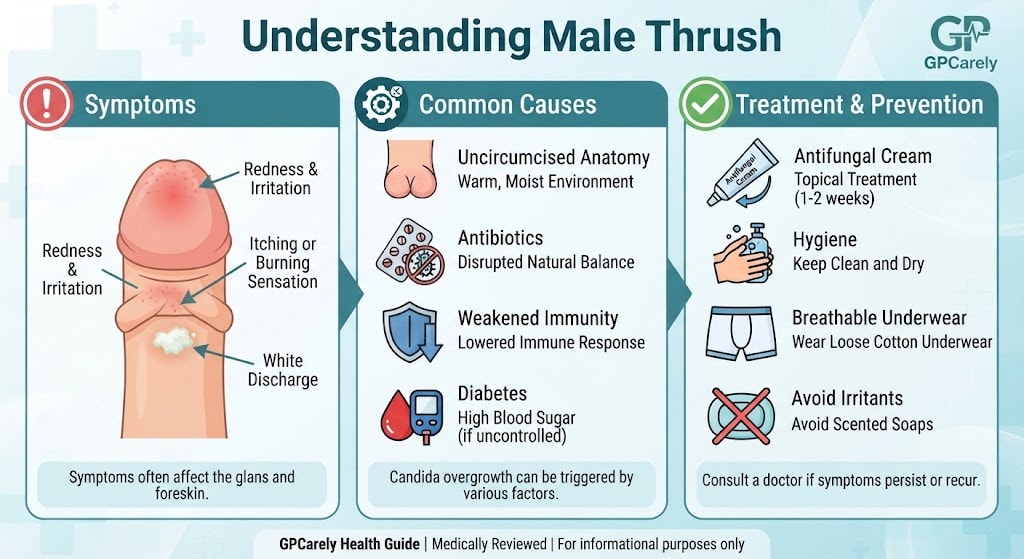
Thrush in men is caused by an overgrowth of Candida, the same fungus responsible for vaginal yeast infections. In men, it most commonly affects the head of the penis and, in uncircumcised men, the area under the foreskin, a condition often called balanitis when inflammation is present. Candida naturally lives on skin in small amounts without causing problems, but certain conditions can allow it to overgrow and trigger symptoms.
Common Symptoms
- Redness and irritation on the head of the penis
- Itching or a burning sensation, particularly during urination
- A thick, white discharge under the foreskin (more common in uncircumcised men)
- Shiny or swollen patches of skin on the glans
- Discomfort or pain during sex
Symptoms can range from mild irritation to more noticeable inflammation, and they sometimes flare up shortly after sexual contact with a partner who has a yeast infection, although this isn't the only way thrush develops in men.
What Causes Thrush in Men?
Several factors can increase the likelihood of developing thrush:
- Being uncircumcised, since the warm, moist environment under the foreskin can support fungal overgrowth
- Diabetes, particularly when blood sugar isn't well controlled, as higher glucose levels support yeast growth
- Antibiotic use, which can disrupt the natural balance of microorganisms on the skin
- A weakened immune system, from certain medications or underlying health conditions
- Poor hygiene or excessive hygiene, both of which can disrupt the skin's natural balance
- Sexual contact with a partner who has an active yeast infection, though this isn't required for thrush to develop
It's worth noting that thrush in men can occur without any identifiable trigger at all, since Candida is naturally present on the skin regardless of these risk factors. In fact, many men experience an isolated episode of thrush at some point without any of the risk factors above being clearly present, which is a normal part of how the skin's microbial balance can shift temporarily due to minor, often untraceable causes.
Thrush vs Other Causes of Penile Irritation
Not all irritation or redness on the penis is thrush. Similar symptoms can be caused by:
Condition Distinguishing Feature Thrush (Candida) White discharge under foreskin, itching, shiny redness Bacterial balanitis Often more painful, may have yellowish discharge Contact dermatitis Linked to soap, condoms, or fabric; usually no discharge Psoriasis Well-defined, scaly red patches, often elsewhere on the body too Sexually transmitted infections May include sores, unusual discharge, or urinary symptomsBecause these conditions can look similar, especially in mild cases, a proper assessment is useful if symptoms don't clearly match typical thrush or don't improve with basic antifungal treatment. If irritation looks more like well-defined, scaly patches rather than typical thrush symptoms, our guide on whether psoriasis is an autoimmune disease explains how psoriasis can sometimes present on the genital area and how it differs from a fungal infection.
Treatment Options
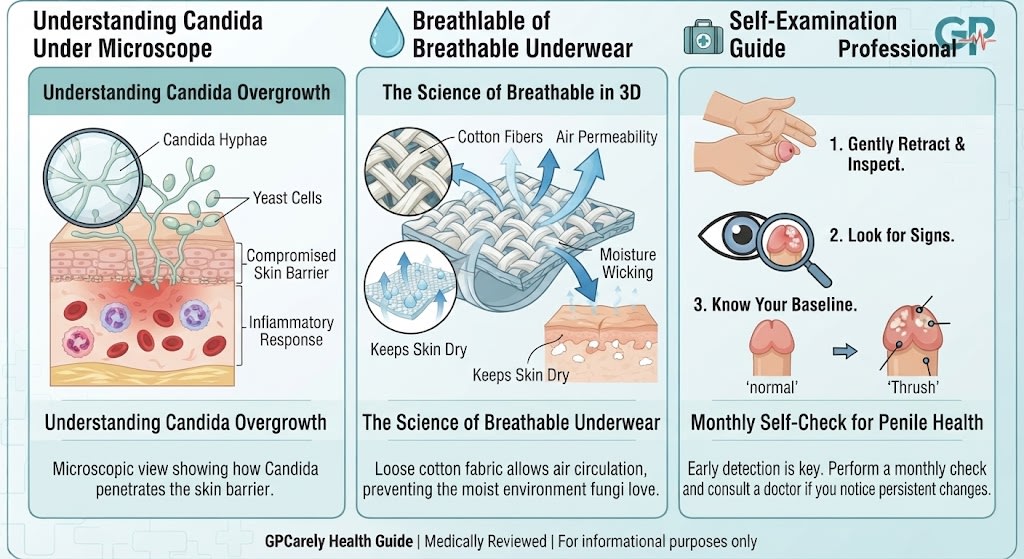
Mild cases of thrush in men are often treated effectively with an over-the-counter antifungal cream applied to the affected area for the recommended duration, typically one to two weeks. Keeping the area clean and dry, avoiding scented soaps, and wearing breathable underwear can support recovery alongside treatment. For more persistent or recurrent cases, a doctor may prescribe an oral antifungal medication or investigate underlying causes such as undiagnosed diabetes. If you'd prefer a same-day assessment, it's worth checking our current offers and packages for available consultation options.
Preventing Thrush Recurrence
A few practical habits can reduce the likelihood of thrush returning:
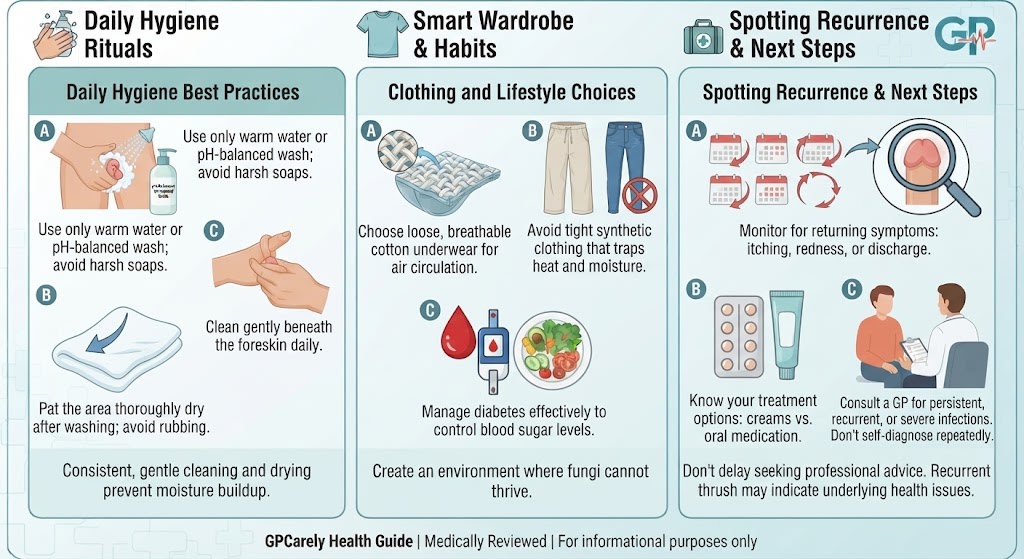
- Wash the penis daily with water, gently retracting the foreskin if uncircumcised, and avoid harsh or scented soaps that can disrupt the skin's natural balance
- Dry the area thoroughly after washing or swimming, since a moist environment supports fungal growth
- Wear breathable cotton underwear rather than tight synthetic fabrics
- If you have diabetes, keeping blood sugar within a healthy range reduces the risk of recurrent yeast overgrowth
- Avoid unnecessary antibiotic use, and discuss antifungal prevention with a doctor if antibiotics are needed for another condition and thrush has been a recurring issue
None of these steps guarantee thrush won't return, but they reduce several of the most common contributing factors.
When to See a Doctor
It's worth seeking medical advice if:
- Symptoms don't improve after a full course of over-the-counter antifungal treatment
- This is your first suspected episode and you want a confirmed diagnosis
- Symptoms are severe, painful, or accompanied by sores or unusual discharge
- Thrush keeps recurring, which may point to an underlying condition like diabetes
- You're unsure whether the symptoms are actually thrush or something else
A doctor can typically diagnose thrush through a physical examination and, if needed, a swab test, which is particularly useful when symptoms don't clearly fit the typical pattern. You can browse our full range of available services if you'd like to see what an assessment involves before booking.
How an Online Consultation Can Help
An online consultation offers a discreet way to discuss symptoms that many men feel uncomfortable raising in person, especially for a first episode. A doctor can review your symptoms, ask relevant follow-up questions, and in many cases recommend or prescribe appropriate treatment without requiring an initial in-person visit. This is particularly useful for recurring cases where identifying an underlying cause, such as blood sugar levels, matters more than repeated symptom treatment. You can arrange this through our men's health service or book an online appointment directly.
For a broader comparison of thrush and other vaginal or genital conditions, including how thrush differs from bacterial vaginosis, see our guide to BV vs yeast. If you have more general questions about how online consultations work, our FAQs page covers the most common ones.
Frequently Asked Questions
Is thrush in men a sexually transmitted infection? No, thrush isn't classified as an STI, since Candida naturally lives on the skin and can overgrow without any sexual contact involved, though it can occasionally be passed between partners.
Can thrush in men go away on its own? Mild cases sometimes improve with good hygiene alone, but most cases benefit from antifungal treatment, and symptoms that persist without treatment can worsen or become more uncomfortable over time.
Does being circumcised prevent thrush? Circumcision reduces the risk since it removes the warm, moist environment under the foreskin where Candida thrives, but it doesn't eliminate the possibility of thrush entirely.
Should I avoid sex if I have thrush? It's generally advisable to avoid sex until symptoms have cleared, both for comfort and to reduce the small risk of passing the infection to a partner.
Can diabetes cause recurring thrush in men? Yes, poorly controlled blood sugar creates conditions that support yeast overgrowth, and recurring thrush is sometimes one of the first signs of undiagnosed or poorly managed diabetes.
Conclusion
Thrush in men is more common than it's often discussed, and it's generally straightforward to treat once correctly identified. Redness, itching, and white discharge under the foreskin are the classic signs, but because similar symptoms can stem from other causes, a proper assessment is worthwhile for a first episode, persistent symptoms, or frequent recurrence. Left unaddressed, recurring thrush can also be a signal worth investigating for underlying conditions like diabetes.
This article provides general health information and is not a substitute for individual medical advice. Genital symptoms can have multiple causes, and a clinician may need to assess your specific situation. If symptoms are severe or don't improve with treatment, consult a qualified healthcare professional. In an emergency, contact your local emergency services.
Content on this page is reviewed periodically by the GPCarely clinical team for accuracy against current general practice guidance and is updated when relevant medical information changes.