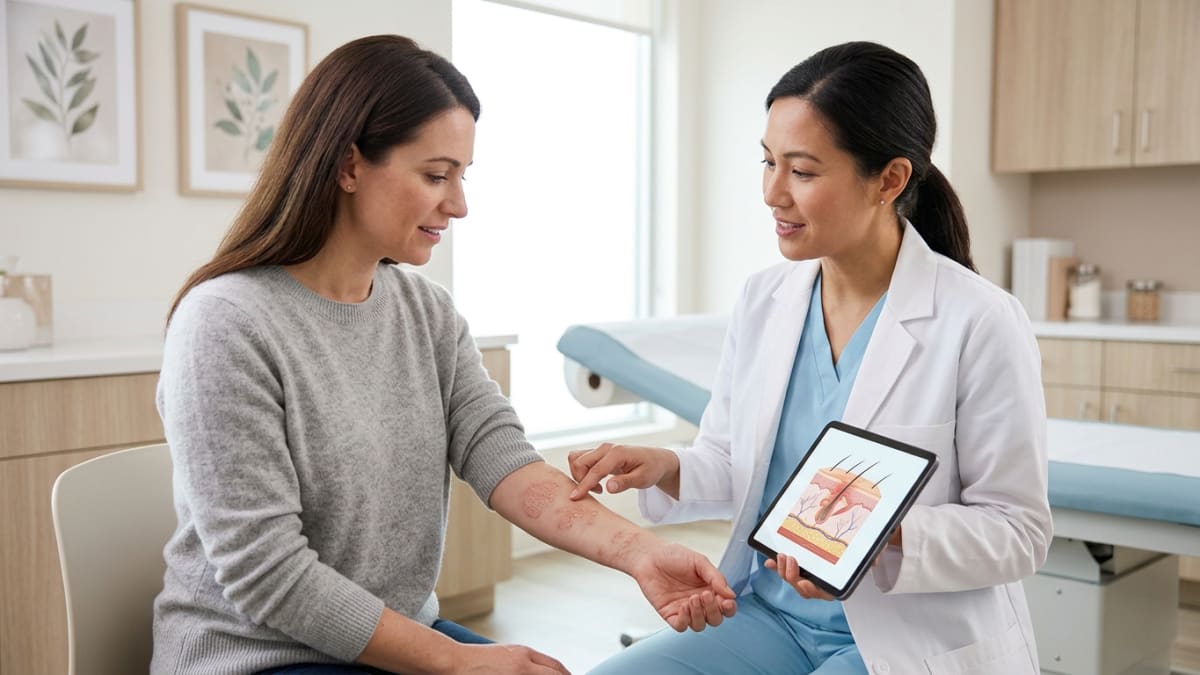
Last updated: 13 September 2026 | Medically reviewed by: The GPCarely Clinical Review Team | Reading level: General audience
Few things trigger instant worry quite like an unexplained, angry red rash. If your skin—or your child’s—suddenly turns dry, flaky, cracked, or raw, the very first question that often comes to mind is straightforward: is eczema contagious?
It is a completely natural reaction. When skin looks irritated or starts peeling, our protective instincts kick in. We worry about accidentally catching it from a hug, passing it to our partner, or spreading it across our family through shared towels.
Here is the plain, reassuring medical truth right up front: eczema is 100% not contagious.
You cannot catch eczema from physical touch, you cannot contract it from an infected surface, and you cannot give it to anyone else. It is not an infection; it is an inflammatory, immune-mediated barrier condition.
However, living with eczema is rarely as simple as hearing "it's not contagious" and moving on. The intense itching, the sleepless nights, and the way eczema skin easily picks up secondary bacterial complications mean you need clear, medically grounded answers.
Below, we break down why eczema behaves the way it does, how to tell an ordinary flare from a genuine infection, what clinical treatments actually work, and how to protect your skin day-to-day.
What Actually Happens to the Skin in Eczema?
To understand why eczema cannot spread between people, it helps to look beneath the surface at how healthy skin works.
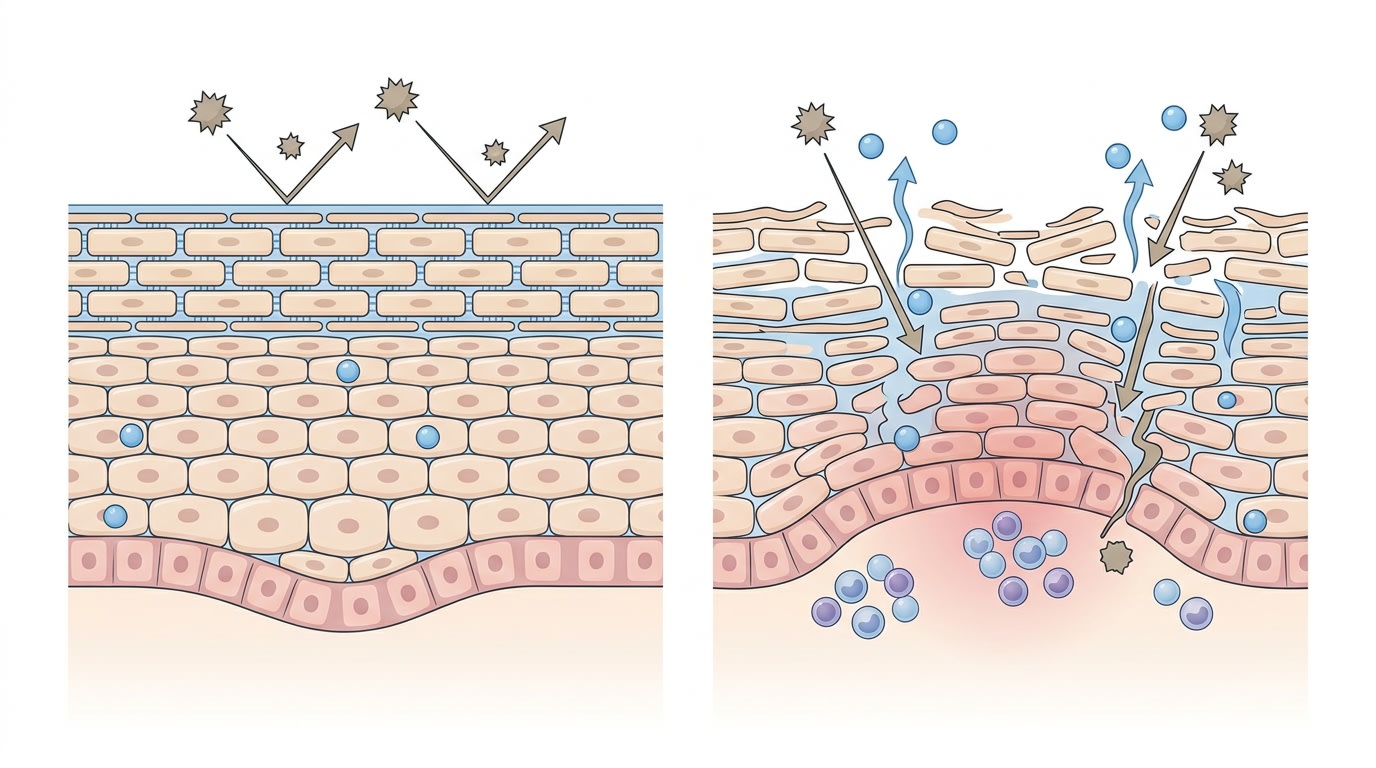
Think of your outermost skin layer—the stratum corneum—as a protective brick wall.
- The skin cells (corneocytes) are the bricks.
- The natural fats, ceramides, and structural proteins are the mortar holding those bricks firmly together.
In healthy skin, this brick-and-mortar structure performs two crucial jobs: it locks deep hydration inside, and it blocks foreign irritants, allergens, and microbes from getting in.
In someone with eczema (most commonly atopic dermatitis), that protective wall has structural gaps. Many individuals carry a genetic mutation in a protein called filaggrin, which is responsible for building and reinforcing that mortar.
Without sufficient filaggrin:
- Moisture evaporates rapidly, a process known as trans-epidermal water loss.
- The skin becomes parched, brittle, and microscopically cracked.
- Everyday particles—like house dust, laundry soap residues, and pollen—slip past the damaged barrier.
- The immune system detects these harmless particles, misinterprets them as an attack, and unleashes an intense inflammatory response.
The redness, swelling, and relentless itch you see are the outward signs of an internal immune battle—not a transmissible bug.
The "Spread" Confusion: Why Does Eczema Appear in New Spots?
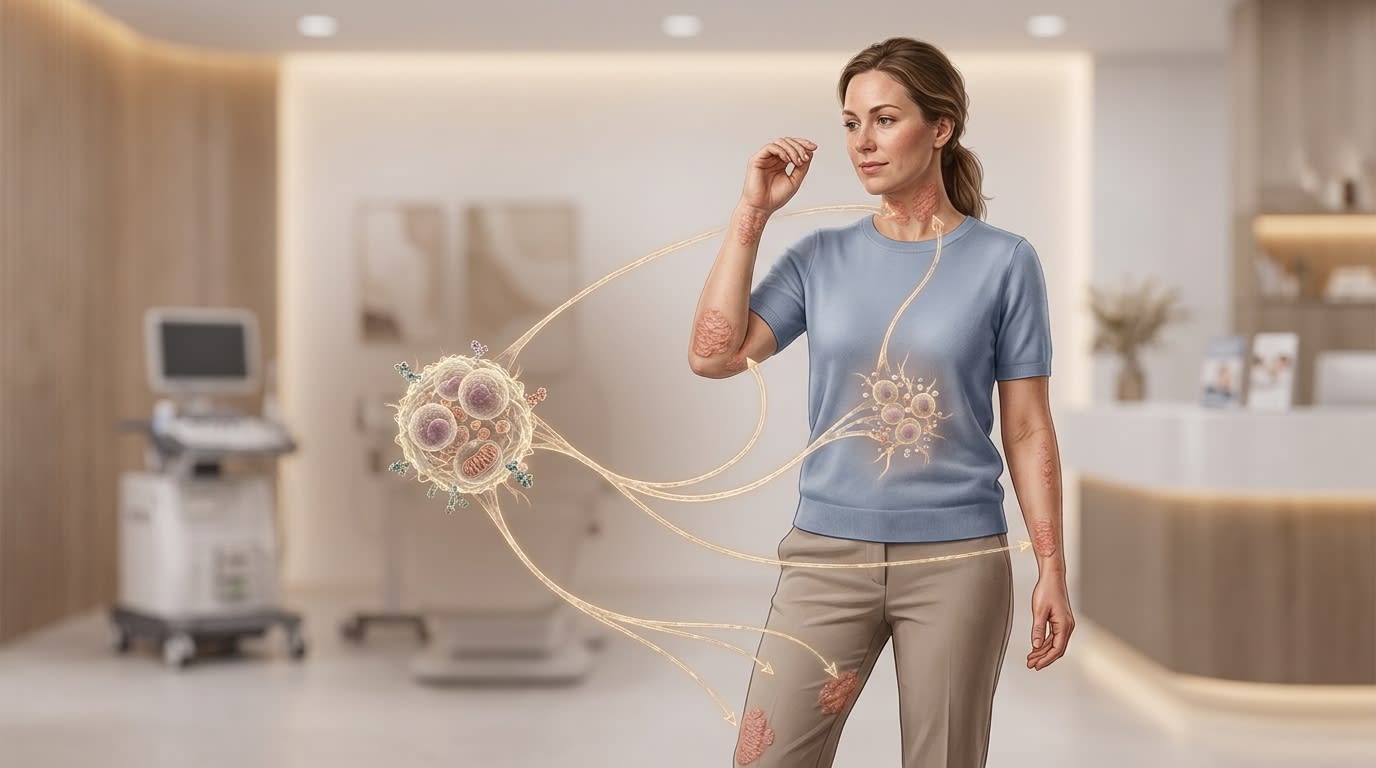
One of the main reasons people believe eczema is contagious is because it often appears to "spread" across their own body. A small rough patch on the inside of the elbow suddenly shows up behind the knees, on the neck, or around the wrists.
When patients ask questions like can eczema spread, what they are witnessing is not a bug multiplying across their skin. Instead, it is driven by two internal mechanisms:
1. Systemic Immune Reactivity
Because eczema is linked to an overactive immune system, an internal trigger—such as seasonal pollen, hormonal shifts, or high emotional stress—signals your entire body to become hyper-reactive. When that happens, multiple sensitive areas can flare up simultaneously.
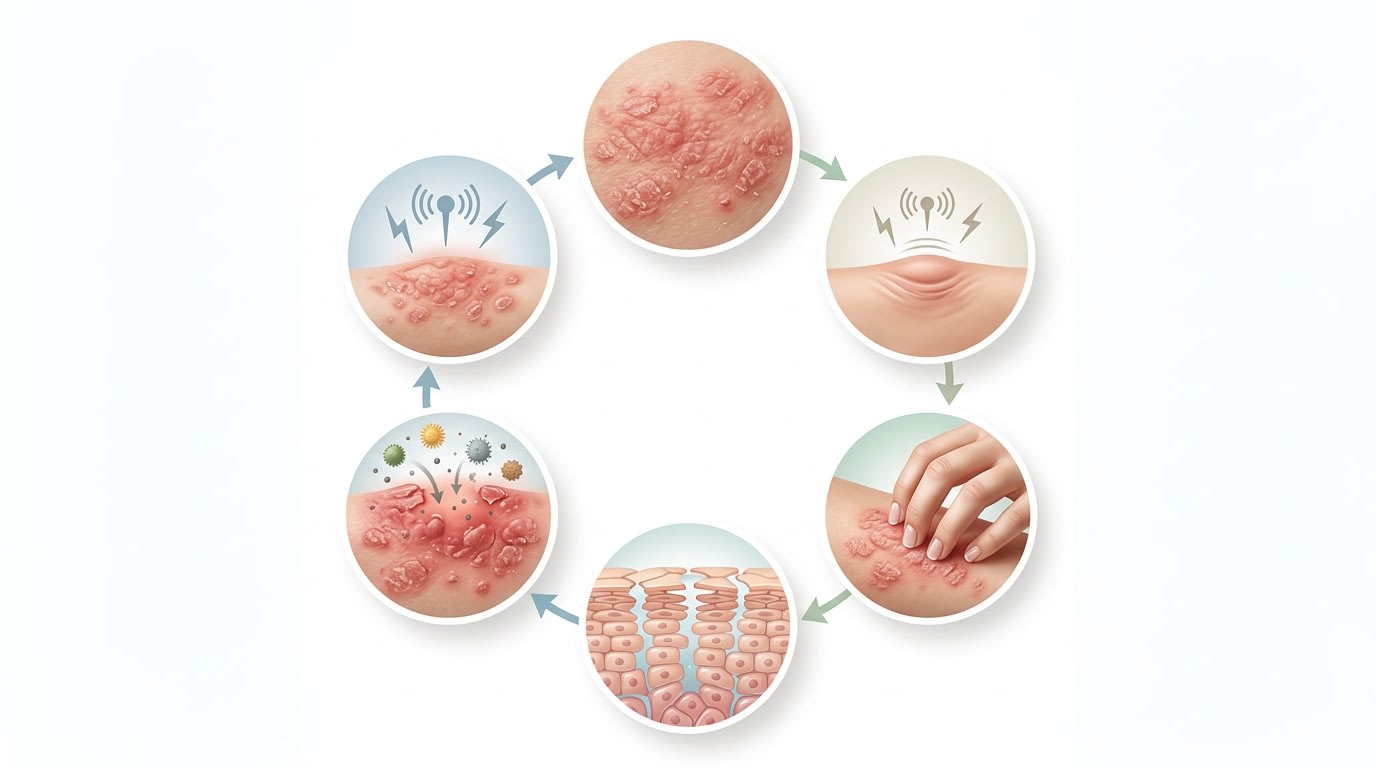
2. The Itch-Scratch Cycle
Eczema triggers a uniquely maddening itch. When you scratch, you physically tear the outer barrier further, releasing histamines and inflammatory chemicals called cytokines into the immediate area. This causes the surrounding skin to itch even more, prompting further scratching and expanding the footprint of the flare.
Common Transmission Myths vs. Clinical Facts
Living with visible skin plaques can be socially exhausting. Misguided comments from friends, classmates, or colleagues often stem from outdated myths. Here is what clinical science says:
- Myth: You shouldn't share a bed or clothes with someone having a flare.
Fact: You cannot catch eczema by sharing sheets, pillows, blankets, or clothing. However, people with eczema are sensitive to laundry detergents, so washing bedding in fragrance-free formulas helps reduce flare-ups. - Myth: Eczema can spread through swimming pools.
Fact: Eczema cannot be transmitted through water. In fact, properly treated swimming pools with mild chlorine can sometimes lower skin bacteria counts. The catch? Chlorine can dry out sensitive skin, so showering and applying a heavy emollient right after swimming is essential. - Myth: Eczema is caused by poor hygiene.
Fact: Eczema has nothing to do with cleanliness. In reality, excessive bathing, aggressive scrubbing, and strong soaps strip away whatever natural oils the skin manages to produce, directly triggering a severe breakout. 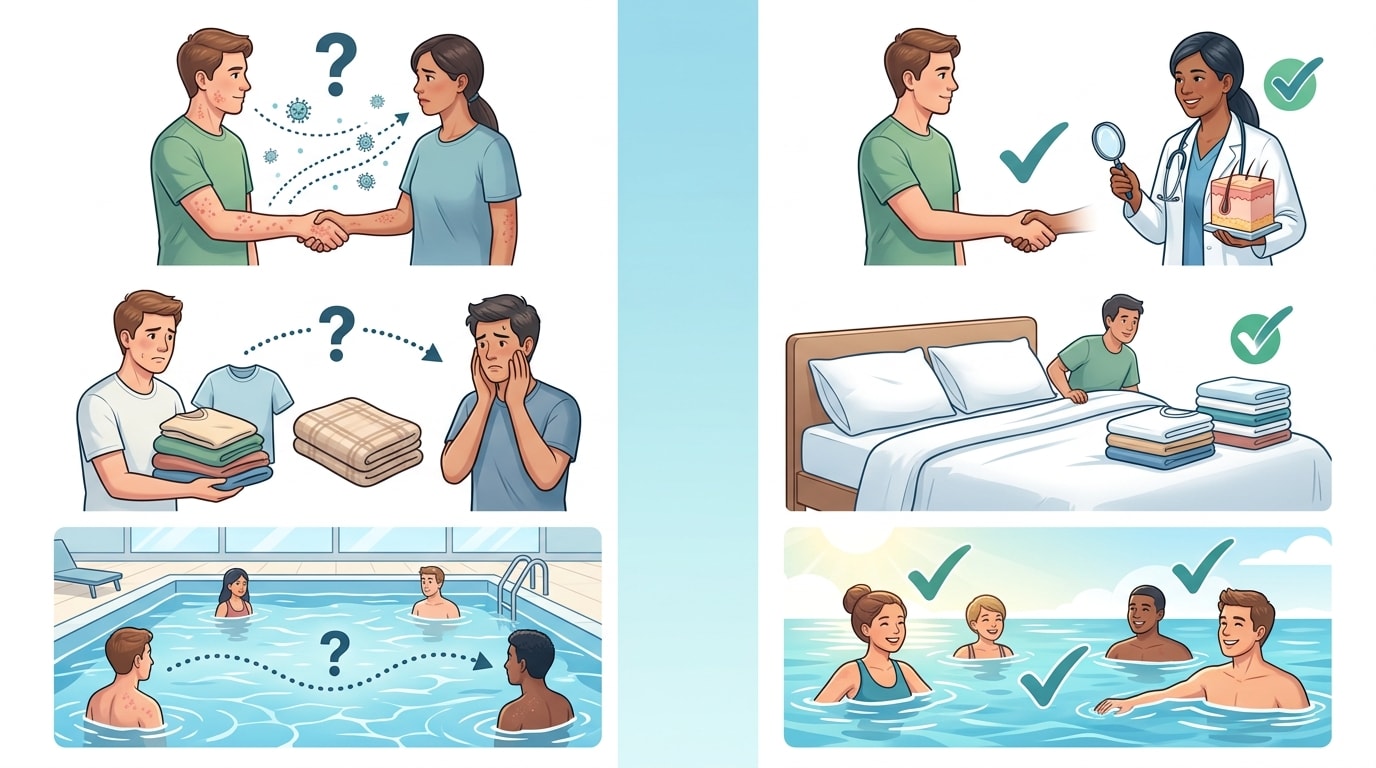
When a Non-Contagious Flare Becomes an Infection
While eczema itself is not contagious, there is one critical caveat every patient and parent must know: eczema-prone skin is prone to secondary infections, and those infections can be contagious.
Because chronic scratching creates microscopic cuts and open sores, ambient bacteria and viruses that normally sit harmlessly on the surface of healthy skin can penetrate deep into tissue.
Bacterial Superinfections (Staph)
The most common invader is Staphylococcus aureus. When Staph enters broken eczema skin, it causes a secondary bacterial infection.
Look out for:
- Oozing, wet lesions
- Honey-colored, crusty scabs that look like dried sugar
- Rapidly spreading redness accompanied by warmth and tenderness
- Swollen lymph nodes in the neck, armpits, or groin
While the eczema remains non-contagious, the Staph bacteria on the surface can be transferred to others through direct skin contact or shared unwashed towels.
Eczema Herpeticum (A True Medical Emergency)
If the Herpes Simplex Virus (the common cold sore virus) comes into contact with open eczema lesions, it can cause a rare but serious infection called eczema herpeticum.
Watch for these warning signs:
- Sudden clusters of tiny, painful, fluid-filled blisters that look like a "punched-out" pattern
- Severe pain rather than the usual itching
- Sudden high fever, chills, and severe exhaustion
Eczema herpeticum spreads rapidly and requires emergency medical care with prescription antiviral medication to prevent systemic complications.
Types of Eczema and What Triggers Them
Eczema is not a single disease. Different forms have distinct clinical triggers, though none of them are contagious:
Atopic Dermatitis
The classic, hereditary form of eczema. It often forms part of the "atopic triad," where an individual or their close family members also experience asthma and environmental allergies (like hay fever). It tends to settle in the body's natural skin folds—creases of the elbows, behind the knees, and around the wrists and neck.
Contact Dermatitis
This occurs when the skin reacts to a specific external trigger:
- Irritant contact dermatitis: Caused by direct damage from everyday chemicals—dish soap, bleach, alcohol rubs, or frequent wet-work.
- Allergic contact dermatitis: A true allergic reaction where your immune system targets a specific ingredient, such as nickel in jewelry, fragrance in cosmetics, or preservatives in wet wipes.
Dyshidrotic Eczema
A distinct presentation that causes intensely itchy, deep-seated, tiny blisters on the sides of the fingers, palms of the hands, and soles of the feet. It is often aggravated by excessive sweat, humid conditions, and periods of acute psychological stress.
Nummular (Discoid) Eczema
This type appears as stubborn, coin-shaped, scaly circular patches, usually on the arms and legs. Because of its circular shape, it is frequently misdiagnosed as ringworm. However, ringworm is a contagious fungal infection, whereas nummular eczema is purely inflammatory and non-contagious.
How Doctors Accurately Diagnose Eczema
Diagnosing eczema is primarily clinical. A qualified clinician can typically identify the condition by examining your skin and taking a detailed medical history.
Clinical Examination (Appearance & Distribution of Rash) │ ▼ Patient History (Family Atopy, Allergy Triggers, Symptom Timeline) │ ▼ Differential Diagnosis (Ruling out Psoriasis, Fungal Infections, Scabies) │ ▼ Targeted Action Plan (Barrier Repair + Anti-Inflammatory Regimen) During a consultation, your doctor will look closely at:
- The distribution and morphology: How the rash looks, whether it is weeping or dry, and where it appears.
- Personal and family history: Whether anyone in your family suffers from asthma, seasonal allergies, or chronic conditions like is psoriasis an autoimmune disease to distinguish eczema from other scaly plaques.
- Infection screening: Taking a gentle swab of any weeping or crusted areas to rule out bacterial or fungal colonization. Just as an accurate diagnosis helps distinguish between a bacterial vaginosis vs yeast infection in women's health, distinguishing eczema from fungal or bacterial rash patterns ensures you receive the right medication immediately.
- Allergy patch testing: If contact allergies are suspected, patch testing can pinpoint the exact chemical culprits irritating your skin.
If you are dealing with an undiagnosed rash or a flare that refuses to clear, booking a professional GP consultation is the safest, most reliable way to get a clear diagnosis and a targeted prescription.
Evidence-Based Treatment Options
Managing eczema requires a balanced approach: you must repair the fragile physical barrier while simultaneously calming the immune system's inflammatory surge.
Treatment LevelWhat It IsHow It WorksBest Used ForBarrier RestorersMedical-grade emollients and ointmentsCoats the skin in lipids to trap moisture and prevent irritants from enteringDaily baseline care (multiple times per day)Topical SteroidsPrescription hydrocortisone, betamethasone, etc.Rapidly suppresses localized inflammatory cytokinesCalming acute, red, swollen flare-upsNon-Steroidal TopicalsCalcineurin inhibitors (tacrolimus, pimecrolimus)Modulates the local immune response without thinning the skinDelicate areas (eyelids, face, groin)Systemic TherapiesOral immunosuppressants or targeted biologicsCalms the systemic immune cascade from within the bloodstreamModerate-to-severe eczema resisting topical creamsPhototherapyControlled medical narrow-band UVB lightSlows cellular turnover and dampens inflammatory skin responsesChronic, widespread patches
The Essential "Soak and Seal" Protocol
For everyday maintenance, the gold-standard technique recommended by dermatologists is the "Soak and Seal" method:
- Wash in lukewarm (never hot) water for 5 to 10 minutes using a soap-free, non-foaming cleanser.
- Gently pat the skin with a soft towel, leaving it slightly damp. Do not rub.
- Within three minutes, apply your prescribed medicated cream to active flare areas, followed by a generous layer of an emollient ointment all over.
- This traps moisture in the stratum corneum before it can evaporate.
Proactive Daily Habits to Minimize Flares
While genetics determine your baseline risk, your daily environment plays a massive role in how often your skin flares:
- Rethink Your Wardrobe: Stick to loose, breathable natural fabrics like 100% organic cotton, bamboo, or silk. Avoid rough wools and synthetic polyester, which trap heat and cause mechanical friction.
- Control Indoor Humidity: Central heating in winter strips moisture from the air, quickly dehydrating sensitive skin. Keeping a cool-mist humidifier in your bedroom helps maintain an optimal 40% to 50% humidity level.
- Trim and File Fingernails: Keeping nails short and smooth minimizes the barrier damage caused by unconscious scratching during the night. For infants and toddlers, soft cotton mittens can protect fragile skin while they sleep.
- Switch to Gentle Cleansers: Eliminate antibacterial soaps, heavily fragranced body washes, and fabric softeners. Look for products certified by national eczema associations or labeled explicitly as hypoallergenic and fragrance-free.
Frequently Asked Questions
Can adult-onset eczema happen out of nowhere?
Yes. While eczema is widely associated with childhood, it frequently develops in adulthood. Changes in workplace environment (handling chemicals or frequent handwashing), sudden hormone fluctuations, moving to an arid climate, or sustained psychological stress can trigger adult-onset atopic dermatitis.
Does eczema go away on its own?
Many children outgrow eczema or experience significant improvement as their skin barrier matures through adolescence. In adults, eczema tends to be a chronic condition characterized by periods of remission and occasional flares, requiring consistent maintenance and trigger management.
Is eczema caused by a food allergy?
In most adults, no. However, in infants and young children with severe atopic dermatitis, common dietary allergens like cow’s milk, eggs, peanuts, or wheat can sometimes exacerbate flare-ups. Never cut major food groups from a child’s diet without consulting a pediatrician or clinical dietitian.
Why is the itch so much worse at night?
At night, your body's natural levels of cortisol (an anti-inflammatory hormone) dip, skin temperature rises, and trans-epidermal water loss increases. With zero daytime tasks or sensory distractions to occupy your mind, your awareness of the itch sensation peaks, making nighttime scratching particularly intense.
Getting the Support Your Skin Deserves
Living with persistent skin irritation is not just physically uncomfortable; it takes a genuine toll on your sleep, your confidence, and your emotional wellbeing. You do not have to struggle through painful flare-ups or spend money guessing which over-the-counter lotion might help.
At GP Carely, we provide comprehensive, accessible medical care designed around your life. Whether you need an accurate diagnosis, an expert assessment of your skin, or an effective management plan, you can explore our complete medical services or consult with our registered doctors online.
If you need your maintenance creams or regular medications refilled without the wait, our fast prescription renewal service makes it simple. Learn more about GP Carely, explore answers to common patient questions in our clinical frequently asked questions, or get in touch directly with our team through our contact page. When you are ready to take control of your skin health, you can book an appointment today.
Medical Disclaimer: The information provided in this article is for educational and informational purposes only and does not substitute for professional medical advice, diagnosis, or treatment. Always consult a qualified physician or healthcare provider regarding any persistent rash, skin changes, or suspected infections.