
Last updated: 9 September 2026 | Medically reviewed by: The GPCarely Clinical Review Team | Reading level: General audience
Thrush mens cases often go unmentioned simply because men are less likely to talk about genital symptoms compared to women, even though the condition itself is fairly common and usually straightforward to treat. If you've noticed redness, itching, or irritation and suspect thrush, this guide walks through what it actually feels like, how it's confirmed, and the fastest path to relief. If you'd like a deeper breakdown of causes and prevention, our companion guide on thrush on males covers that in more detail.
What Does Thrush Actually Feel Like?
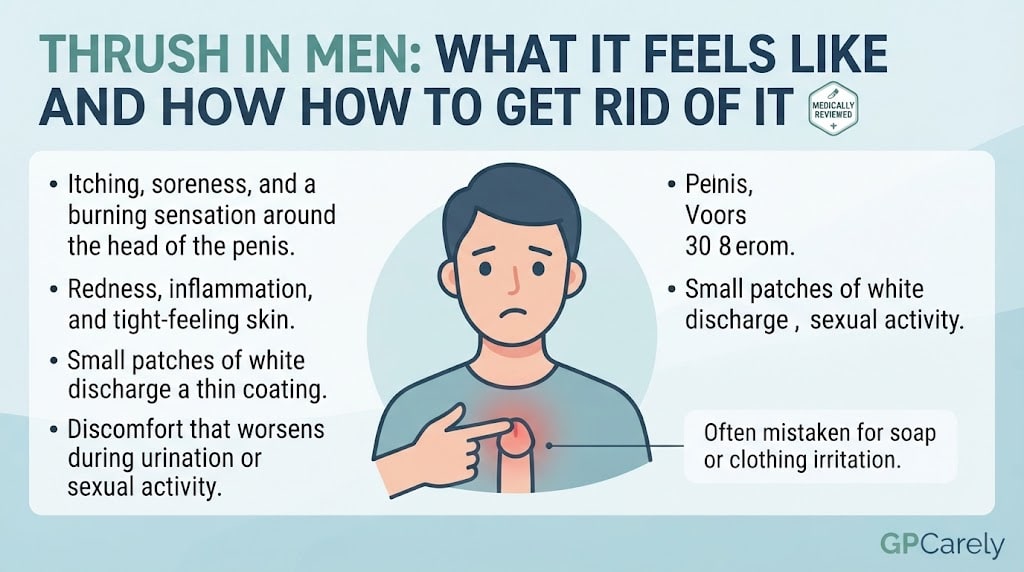
Most men describe thrush as a combination of itching, soreness, and a burning sensation, particularly noticeable around the head of the penis and, in uncircumcised men, under the foreskin. The skin often looks red or shiny, sometimes with small patches of white discharge that can resemble a thin coating rather than a visible liquid. Discomfort tends to worsen during urination or sex, and the area may feel tight or irritated even when not directly touched.
For many men, the first sign is simply itching that doesn't go away with regular washing, which is often mistaken for irritation from soap or clothing until other symptoms develop.
How Is Thrush Diagnosed?
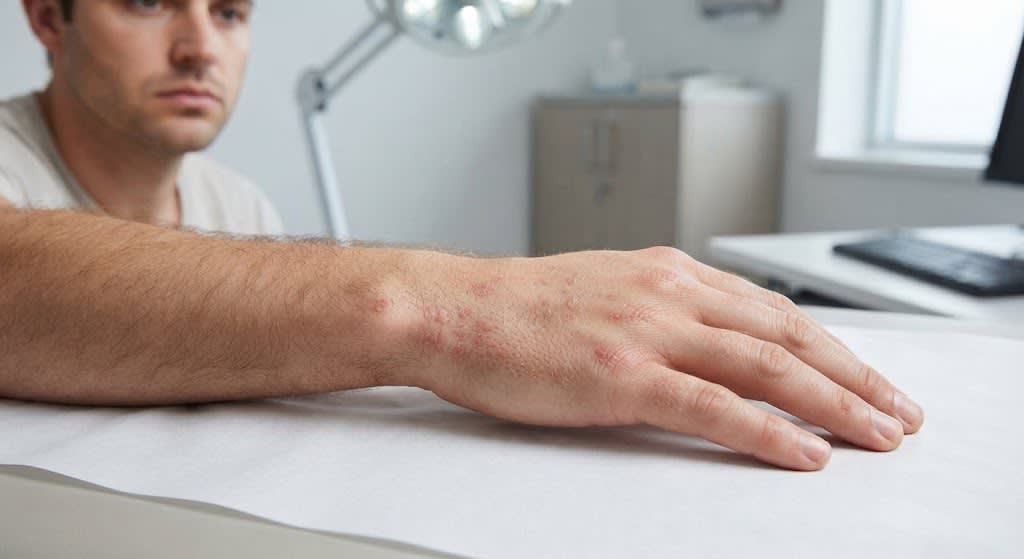
In many cases, a doctor can identify thrush based on a description of symptoms and a visual examination alone, without needing further testing. If the presentation is unclear, doesn't respond to initial treatment, or symptoms are recurring, a simple swab test can confirm the presence of Candida and rule out other causes such as bacterial infections or sexually transmitted infections that can look similar in the early stages. Our FAQs page covers more on what to expect from a diagnostic consultation if you're unsure how the process works.
Getting Rid of Thrush: What Actually Works
Step 1: Antifungal Treatment
The standard first-line treatment is a topical antifungal cream, applied to the affected area for the duration recommended on the packaging or by a doctor, typically one to two weeks. For more persistent cases, an oral antifungal tablet may be prescribed, which some men find more convenient and equally effective.
Step 2: Hygiene Adjustments During Treatment
Alongside medication, keeping the area clean and dry supports faster recovery. This means washing with water rather than harsh soap, drying thoroughly after washing, and avoiding tight or non-breathable underwear until symptoms clear.
Step 3: Avoiding Reinfection
If a regular partner has an active yeast infection, treating both partners at the same time (where appropriate and advised by a doctor) can help prevent the cycle of reinfection. Avoiding sexual activity until symptoms have fully resolved is also generally recommended.

Why This Happens: A Quick Recap of Common Triggers
Thrush develops when the natural balance of Candida on the skin is disrupted, and several everyday factors can contribute to this:
- Recent antibiotic use, which reduces protective bacteria and allows yeast to grow unchecked
- Being uncircumcised, since the area under the foreskin retains warmth and moisture
- Poorly controlled diabetes, where higher blood sugar levels support fungal growth
- A weakened immune system, whether from illness, stress, or certain medications
- Contact with a partner who has an active yeast infection
Recognising which of these might apply to your situation can help both with treatment and with reducing the chance of it happening again.
Why Symptoms Sometimes Don't Clear Up
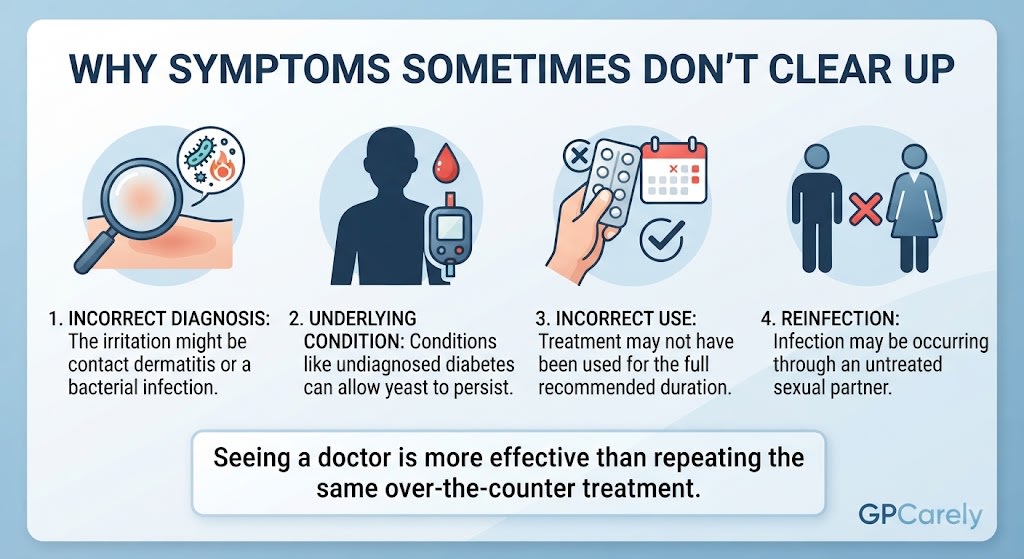
If thrush doesn't improve despite a full course of treatment, a few possibilities are worth considering:
- The diagnosis may be incorrect, and the irritation could be caused by something else, such as contact dermatitis or a bacterial infection
- An underlying condition, such as undiagnosed diabetes, may be allowing yeast to persist despite treatment
- The treatment may not have been used correctly or for the full recommended duration
- Reinfection may be occurring through an untreated partner
In any of these situations, seeing a doctor rather than repeating the same over-the-counter treatment is the more effective next step.
When to See a Doctor
- Symptoms persist after a complete course of antifungal treatment
- This is your first suspected episode of thrush
- Symptoms are severe, or you notice sores, unusual discharge, or pain unrelated to typical thrush
- Thrush keeps recurring more than a couple of times a year
- You have diabetes or another condition that may be contributing to recurrence
How an Online Consultation Can Help
Many men prefer discussing symptoms like this through an online consultation rather than an in-person visit, particularly for a first episode. A doctor can review your symptoms, ask relevant questions about your history, and in many cases recommend or prescribe appropriate treatment directly. If your case seems more complex or recurring, they can also advise on further testing or an in-person examination where needed. New to our platform? You can learn more about us or get in touch with any questions before your first booking. You can arrange this through our men's health service, and if you'd like to see current consultation pricing, our offers and packages page lists what's currently available.
Booking is usually quick — you can book an online appointment directly, or browse our available services first if you'd like to understand the full range of support on offer.
Frequently Asked Questions
How long does thrush in men usually take to clear up? With appropriate antifungal treatment, most cases improve within one to two weeks. If symptoms haven't improved by then, it's worth seeing a doctor rather than continuing the same treatment.
Can thrush spread to other parts of the body? In rare cases, Candida overgrowth can affect skin folds or other moist areas of the body, though this is uncommon in otherwise healthy men and more often seen in those with a weakened immune system or poorly controlled diabetes.
Is it normal to feel embarrassed about seeing a doctor for this? It's a very common feeling, but thrush is a routine, non-stigmatised condition for healthcare providers, and getting it properly treated is generally faster and more effective than trying to manage embarrassment by avoiding care.
Can I have sex again once treatment starts? It's generally advisable to wait until symptoms have fully cleared, both to avoid discomfort and to reduce the chance of passing the infection to a partner or experiencing reinfection.
Does thrush mean I have poor hygiene? No. Thrush is caused by a shift in the natural balance of fungus on the skin, which can happen for many reasons unrelated to hygiene, including antibiotic use, diabetes, or simply an isolated, unexplained flare-up.
Conclusion
Thrush in men typically presents as itching, redness, and irritation around the penis, and it's usually straightforward to treat with antifungal cream or tablets once correctly identified. Persistent or recurring symptoms are worth investigating further rather than repeating the same treatment, since they can sometimes point to an underlying condition or an alternative diagnosis. For more on causes, prevention, and how thrush compares to other conditions, see our full guide to thrush on males, or our broader comparison of BV vs yeast if you're trying to understand genital and vaginal symptoms more generally.
This article provides general health information and is not a substitute for individual medical advice. Genital symptoms can have multiple causes, and a clinician may need to assess your specific situation. If symptoms are severe or don't improve with treatment, consult a qualified healthcare professional. In an emergency, contact your local emergency services.
Content on this page is reviewed periodically by the GPCarely clinical team for accuracy against current general practice guidance and is updated when relevant medical information changes.